The origin of audio guides
The first audio guides appeared in the middle of the 20th century. The Stedelijk Museum in Amsterdam, one of the most important museums for modern and contemporary art, was one of the first to provide its visitors with the possibility to expand the information on the panels and thus decide their individual experience by means of a shortwave radio system.
It was not until almost a decade later that the first museums incorporated this revolutionary tool as an additional service for their visitors. These were the Natural History Museum in the United States and the Louvre. And although it may seem like they have been with us all our lives, the Museo del Prado did not arrive until 2002.
From then until today, its technological evolution has gone at breakneck speed and we have gone from traditional cassettes to cloud services in a very short time. It is important to bear this in mind, as it signifies a real revolution in the museum experience.
The present (and future?) of audio guides
The new generation of audio guides responds to the digital transformation of the tourism sector, an unstoppable process for which we have technologies that allow us to adapt to the new tourist model.
Characteristics of modern "audio guides
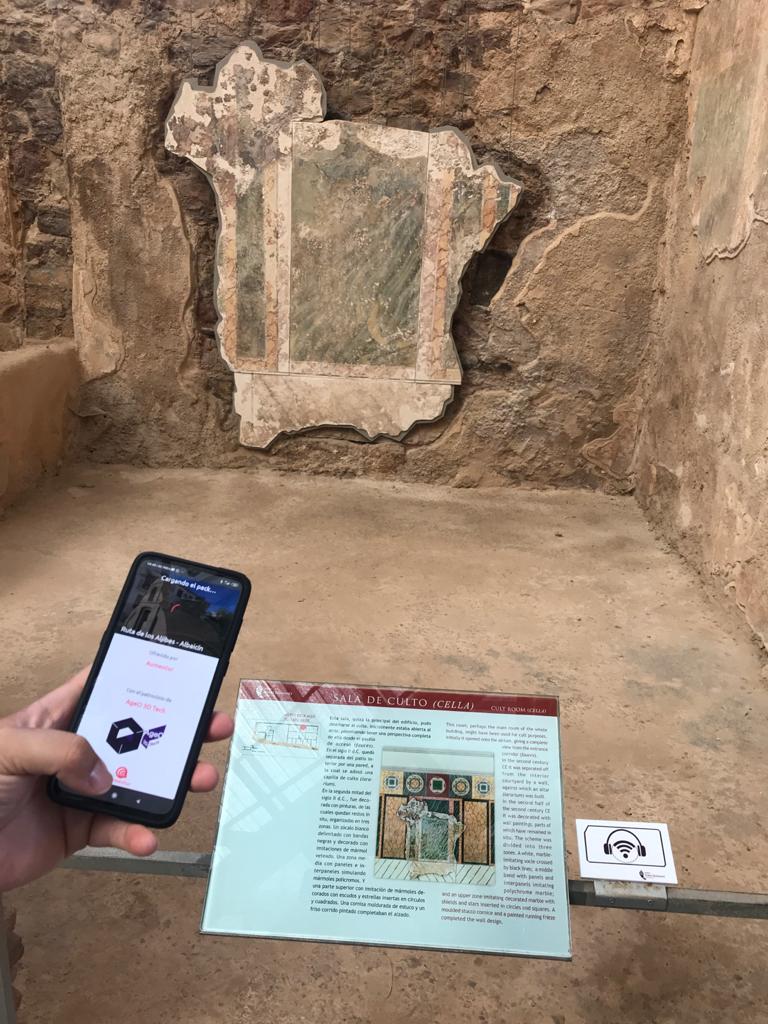
It is likely that even the name will end up disappearing, as nowadays audio guides are much more than that. Installed on each visitor's mobile device, they are very complete apps that provide information "a la carte". The main features include:
- They are on a cloud platform
- They are installed on the visitor's mobile phone
- They are automatically activated via GPS, QRs, beacons, ...
- Personalised multimedia content
- They avoid the need for physical elements that could generate mistrust.
- They are more economical
- They are accessible from anywhere
- They are easy to upgrade
- They act as attractors of new visitors.
- They provide a large amount of relevant information to heritage managers and tourist guides in order to optimise their content and adapt it to the needs of tourists.
A la carte experiences in sightseeing tours

Travellers today don't want products or services, we want positive experiences that are unique and personal.
The tourist today can be defined as:
- Hyperconnected. He uses different devices before, during and after his visit. He does not want to use another one, he has his own, which he does not take off.
- Social. Present in more than one social network, he is always consulting opinions and sharing moments and experiences. He knows that his opinion is powerful.
- Sustainable. Is more aware of the impact of their travel and activities. They value positively the conservation of natural and cultural heritage.
- Independent. They organise their own travel and document themselves.
The digital transformation of tourism
By working in the cloud, we can adapt quickly to changes and opportunities and be more effective and efficient.
This new generation of audio guides responds to the digital transformation of the sector, which helps us to increase the value of the destination by adapting it to the new needs of the visitor.
The coronavirus has also changed, and will continue to change, our travel preferences and the way we relate to each other.
From avoiding physical contact in a greeting, which is so characteristic of southern European countries, to avoiding crowded places. In 2020, for example, the attractiveness of the rural world as a tourist destination has increased, and so has the need to ensure that all hygiene and safety measures are complied with. We are no longer so keen on physical contact or sharing objects.
Apps, such as AumenturThe mobile apps allow the tourist to use their own mobile device and select the type of content they want to understand the destination.



 Español
  English (UK)
  Français
  Deutsch
  Italiano