Every city has stories that do not appear on postcards, secrets whispered in its squares and legends engraved on its walls. Grenada, a city of contrasts, is a veritable treasure chest of surprises. Beyond its world-famous monuments, there are details and anecdotes that reveal its unique character. We invite you to discover ten of these curiosities that will make you see the city through different eyes.
The melancholic origins of the Paseo de los Tristes (Walk of Sorrows)

Paseo de los Tristes in Granada
The Paseo de los Tristes is one of the most photographed and romantic places in Granada, with the Alhambra presiding over the scene. But have you ever wondered why such a beautiful place has such a sad name? Its official name is Paseo del Padre Manjón, but everyone knows it as Paseo de los Tristes because, in the past, it was the path that funeral processions had to follow from the city to the old cemetery of San José, located on the Sabika hill. A sombre name for a place full of life.
The «Door of Ears».»
Today it is a bustling square full of flowers, terraces and children playing. But its original name, Bib-Rambla or «River Gate», hides a more gruesome past. People used to know it as the «Puerta de las Orejas», as it was here that the ears of executed criminals were displayed as a public warning. Fortunately, today only the laughter and conversations echo.
The «Mended» Christ of San Miguel Bajo
In this charming square of the Albaicín you will find the «El ".«Christ of the Lañas«. During the Spanish Civil War, the sculpture was broken into pieces to protect it. The residents of the neighbourhood collected and kept each piece in their homes. When the war ended, they came together again to put the pieces back together and restore the original image. If you go up close, you can still see the «lañas» or metal staples that bind the parts together, a symbol of the faith and resilience of a people.

El Corral del Carbón
Today we know it as a beautiful Andalusian courtyard where cultural events are held, but its name reveals a more humble past. The Corral del Carbón was in the 14th century a Nasrid alhóndiga, a kind of hotel for merchants with a warehouse for their goods. After the conquest, the building was converted into a neighbours' corrala and its ground floor was used to store coal, giving it the name that has survived to the present day.
Boilers and Tea Shops

Calle de las Teterías in Granada
Strolling through the New Boilermaking is to be transported to a Moroccan souk without leaving Granada. But, did you know that its official name is not «Calle de las Teterías«? Its real name, Calderería Nueva, recalls the old guild of craftsmen who made cauldrons in this place. Although the cauldrons have disappeared, the aroma of tea, spices and the bustle of commerce have maintained its market essence over the centuries.
Sacromonte
The Sacromonte Abbey was built following the discovery of relics and mysterious books written on lead plates. These texts, supposedly dating from the 1st century, were intended to create a bridge between Christianity and Islam. Although they eventually proved to be an ingenious forgery created by Moors in the 16th century to facilitate coexistence, their discovery unleashed a religious fervour that changed the face of the hill forever.
The Doll's House

The «Casa de la Muñecas» and Alhambra
At the end of the Paseo de los Tristes, at the foot of the imposing Torre de Comares, stands a building that looks like something out of a fairy tale, but which the people of Granada know by a less glamorous name: the «Hotel Reuma«. This architectural jewel, whose real name was «Hotel Bosques de la Alhambra», was built in 1908 as a tourist attraction. However, its extreme proximity to the river Darro condemned it to such intense humidity that it could barely stay open for a decade. Its peculiar appearance has earned it other nicknames such as the «Alhambra".«Doll's House»or «La Maleta», but it is its history of splendour and failure that makes it a truly curious corner.
The hidden letters in the Royal Hospital
The Royal Hospital, hoy sede del Rectorado, es un edificio monumental lleno de historia. Pero en sus paredes esconde un código secreto que muchos pasan por alto. Si te fijas bien en las enjutas de sus arcos renacentistas, verás cómo se repiten dos iniciales: una ‘F’ y una ‘K’. La ‘F’ hace referencia al Rey Católico, Fernando de Aragón. La ‘K’, más misteriosa, se refiere a su nieto, el Emperador Carlos V, cuyo nombre en latín y alemán era ‘Karolus’. Es un sutil pero constante recordatorio del linaje y el poder imperial que financió esta obra, uniendo a abuelo y nieto en la piedra para la eternidad.
The old right of asylum in El Salvador
The Iglesia del Salvador, erected on top of the old Great Mosque of the Albaicín, is not only a mosaic of architectural styles, but also a place with a protected past. For decades, this temple was one of only two churches in the whole of Granada that enjoyed the «..." status.«right of asylum».». This meant that anyone seeking refuge from the authorities or their persecutors could enter and be legally protected. A fact that makes its walls a witness to countless stories of flight and hope.
The Palace of Charles V: A broken dream
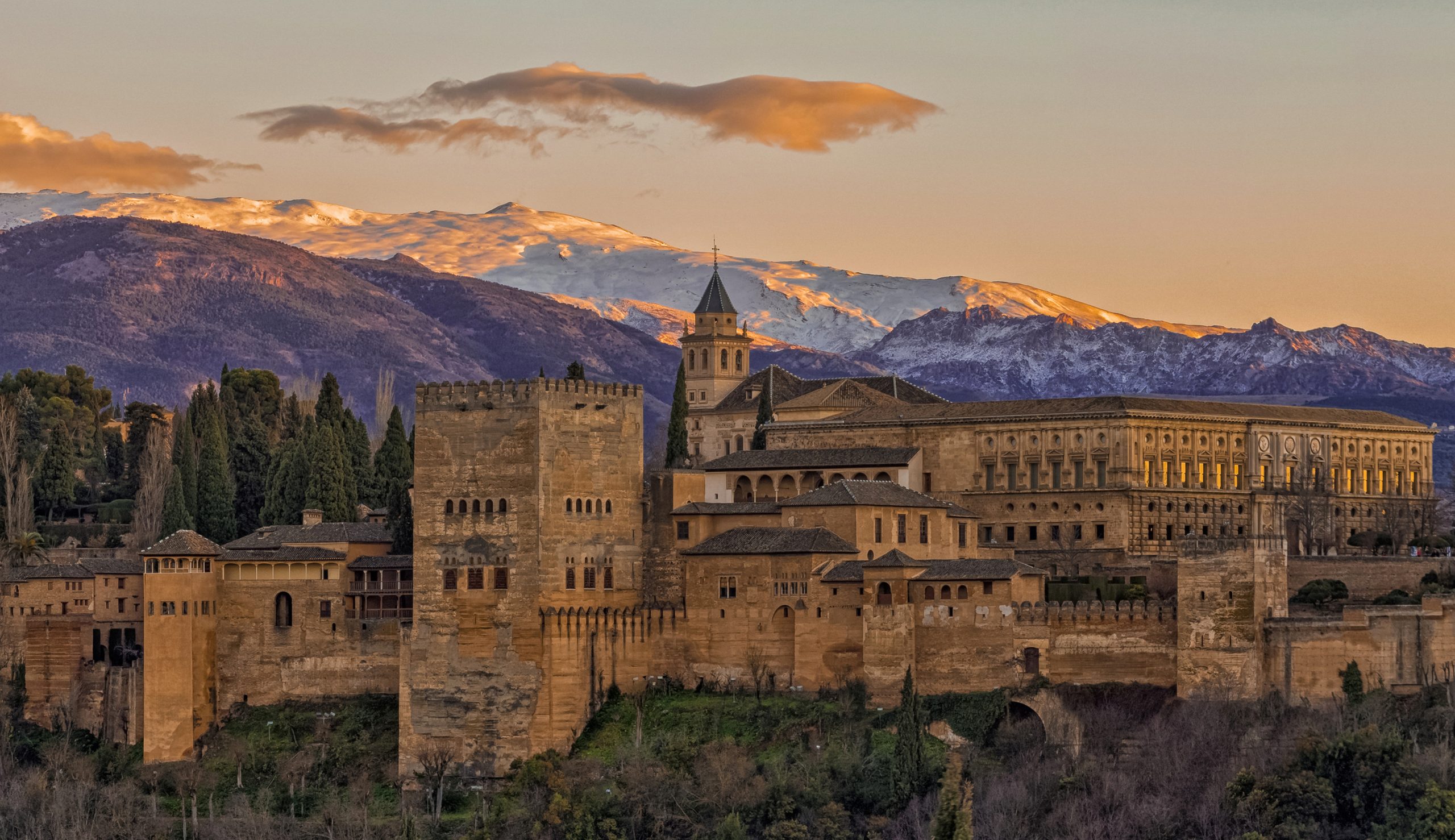
In the heart of the Alhambra stands an imposing Renaissance palace that contrasts with the Nasrid architecture. It ishe Palace of Charles V. The emperor was so fascinated by Granada that he decided to build his royal residence here after his marriage to his wife. Isabel of Portugal. However, fate had other plans. Thirteen years later, his great love, the Empress Elisabeth, died. The blow was so hard for Charles V that he withdrew to a monastery, abandoning the project. The palace he had dreamed of as a love nest was never to be inhabited by him, remaining a majestic reminder of what might have been.
Now that you know some of Granada's curiosities, go beyond the postcard of the Alhambra and visit, in our 2-day guide, Download and discover all the corners of this city that will captivate you from the first moment you see it!

App Aumentur in Granada


 Español
  English (UK)
  Français
  Deutsch
  Italiano