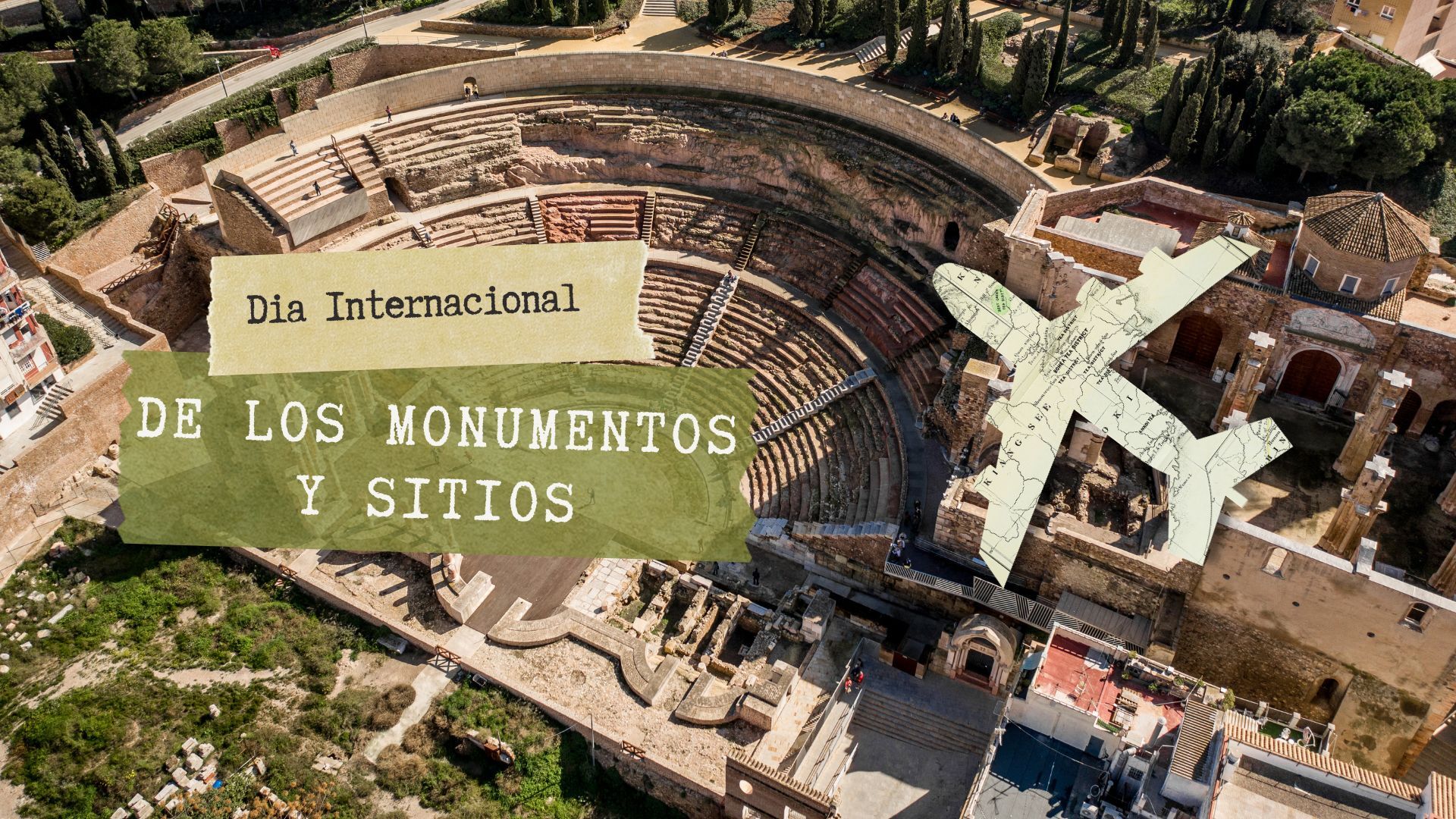
April 18th marks an unmissable date on the calendar: the International Day for Monuments and Sites. During this journey, the stones of our geography take on a special prominence, and Spain has more than enough reasons for this celebration. Over the past few decades, various public consultations and large surveys among travellers have outlined a list of seven places that, by social consensus and historical value, form the 7 Wonders of Spain.
These jewels stand out for merits that go far beyond their photogenic qualities. They represent milestones capable of withstanding the wear and tear of centuries. They hold technical secrets and legends that the average visitor often overlooks. If you plan to celebrate this day by visiting one of them, prepare yourself to observe closely and look beyond the surface. Discovering the invisible history that supports each wall requires curiosity and the right tools to decipher the past.
1. The Alhambra of Granada
The Alhambra heads almost all popularity rankings and was the main Spanish finalist in the selection for Wonders of the Modern World. Although today we know it as «the Red One», in its heyday the Alhambra was a dazzling white city that shone under the sun. Its walls hide details that most people are unaware of, such as the paintings hidden in the domes of the Fountain of the Lions or the «Tanto Monta» inscriptions that the Catholic Monarchs left imprinted on the Nasrid walls after the conquest.
Beyond its aesthetic, its true mastery lies in the invisible. Architects introduced lead sheets between the columns and their bases, creating a damping system that allows the building to sway during earthquakes. Thanks to this medieval seismic engineering, its delicate plasterwork remains intact after six hundred years. And if you want to discover more fascinating facts like this, we suggest you read our article on the ten curiosities of Granada.

Granada Guide
2. La Sagrada Familia, Barcelona
The Holy Family It is the monument that defines Barcelona's skyline and an object of constant study across the globe. Gaudí detested the straight line, considering it alien to nature, and designed the interior of the temple as a living organism. The columns function like trees branching out to support a ceiling that filters light differently depending on the time of day and the season.
In this pursuit of the natural, Gaudí integrated fascinating icons such as a snail, symbolising that the path to perfection is slow and requires effort. The importance of this temple will reach its zenith very soon; when the Tower of Jesus Christ is completed, the Sagrada Familia will become the tallest church in the world. This milestone will mark the end of a work that has taken over a century to complete, forever transforming the concept of universal architecture.

Aumentur Barcelona Visitor Guide
3. The Mezquita-Cathedral of Córdoba
The Mosque-Cathedral of Córdoba It is the greatest example that history is not erased, but masterfully superimposed. Walking through its forest of over 850 The columns are like stepping back in time to different empires. Looking closely at the bases and capitals, you'll discover they are all different; many were salvaged from ancient Roman temples and Visigothic buildings. We are looking at monumental artistic recycling where each stone tells a story predating the construction of the mosque itself.
4. The Aqueduct of Segovia
Roman technique. Its more than 20.000 Granite blocks are held together without a drop of mortar or cement. The entire structure survives thanks to a supremely precise balance of forces that appears to be a physical miracle. There is a local legend about a pact with the devil to finish the work in one night, although the technical reality is even more fascinating: a miscalculation of barely a few millimetres in the base would have caused the arches to collapse centuries ago.
5. The Monastery of El Escorial, Madrid
Philip II conceived this place as a centre where knowledge, faith, and death went hand in hand. Beneath its austere, barracks-like appearance lies what many called the «eighth wonder» of the Renaissance. One of its most enigmatic corners is the Royal Pantheon, a circular chamber of marble and gold. Before reaching their final resting places, royal remains must spend decades in the «Podridero» (rotting room), a hidden chamber where time performs its final act of transformation before eternal rest.

6. The Roman Theatre of Mérida
Merida reflects the heritage of the ancient Emerita Augusta And its theatre represents the heart of that legacy. This space stands out for its imposing stage front and its surprising relevance; it continues to welcome thousands of spectators every summer. Its acoustics are so refined that an actor can whisper at the centre of the stage and be heard in the last row of the tiered seating. This sound design presents a challenge of understanding for many modern architects who try to replicate that clarity of sound without electronic amplification.

7. The Alcázar of Toledo
Reaching the highest point of Toledo, this fortress has witnessed every siege and every change of era on the peninsula. Its structure is a visual summary of Spanish history: each of its four facades belongs to a distinct style and era (Gothic, Renaissance, Plateresque, and Baroque). It is a condensed architecture textbook in a single block of stone that holds, within its walls, everything from Roman remains to echoes of our most recent history. As a preview, here you have the 10 essential places to see in the city of Toledo and if you're planning a getaway, we recommend Download the guide in 2 days in Toledo.

A new way to look at the wonders of Spain
All these «wonders» have been chosen time and time again by the public in different temporal moments and private surveys because they connect with something deep within our identity. However, the true challenge for today's traveller is not to complete a list or collect photos on their phone. The challenge is to learn to read what the monuments are telling us through their cracks and their design.
In this Day of Monuments, we invite you not to be a passive spectator. Stop at that detail that doesn't seem to fit, look for the stonemason’s mark on the stone, or try to understand how that room was lit five hundred years ago. The true marvel is not just the building itself, but its capacity to make us travel through time if we know how to look at it.
To achieve that deep connection, Aumentur You hold in your hand the key that opens those invisible doors. Through its intelligent guides, the app offers you precisely the insight needed to understand what the stones keep silent, allowing you to explore each of these wonders at your own pace and with all the historical context they deserve.
Which monument would you like to add that you consider a marvel?


 Español
  English (UK)
  Français
  Deutsch
  Italiano